.png)
The Power of Visual Supports for Children

How simple visual tools can transform understanding, independence and participation.
For many children — particularly neurodivergent children and children with developmental disabilities — the world can move fast.
Instructions change quickly. Language disappears the moment it is spoken. Expectations shift without warning.
Visual supports slow the world down.
They make information visible, predictable and repeatable — giving children the time and clarity they need to understand what is happening and what is expected of them.
And when children understand what is happening, something powerful happens:
They can participate.
Why Visual Supports Work For Children
Visual supports are tools that present information in a visual format rather than relying only on spoken language.

Examples include:
visual schedules
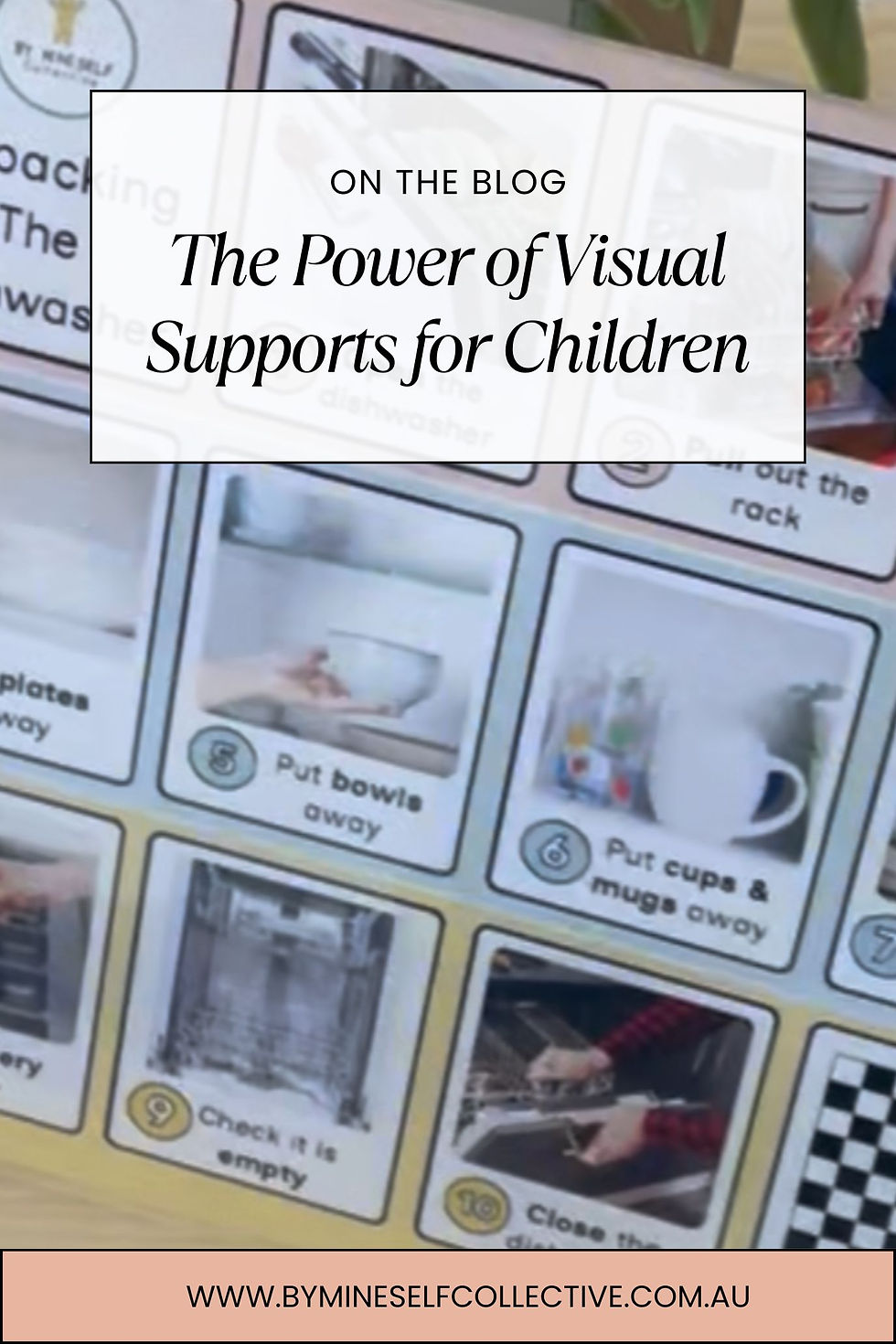
step-by-step task cards
first–then boards
choice boards
routine charts
communication visuals
Unlike spoken instructions, visuals stay in place. Children can return to them again and again, processing the information at their own pace.
Research consistently shows that visual supports can:
reduce anxiety and uncertainty
improve communication
support executive functioning
increase independence
reduce challenging behaviour by increasing understanding
In simple terms:
When expectations are visible, success becomes more achievable.
Research consistently shows that visually structured supports help children understand sequences of activities and navigate everyday routines more successfully.
Visual Supports Reduce Cognitive Load
Many children — particularly autistic children or children with ADHD — experience differences in working memory, processing speed and executive functioning.
Holding multiple spoken instructions in mind can be incredibly difficult.
For example, a child might hear:
“Put your lunchbox away, get your hat, line up at the door and wait quietly.”
But by the time they reach step two, step one may already be forgotten.
And children are not the only people who benefit from visual supports.
My husband cannot understand why I put Waze on when driving somewhere new — especially after he has just given me extremely detailed verbal directions.
“Turn left at Smith Street, then right at Johnson Street, then take the third exit…”
Honestly — if you cannot tell me:
“It’s the street next to the Maccas with the half-lit sign next to the big pink building”
…I have absolutely no idea where I am going.
Most of us rely on visual cues far more than we realise.

Think about it:
road signs
maps
GPS navigation
icons showing where the toilets are at the shops
the little camera icon on a road sign that magically makes everyone slow down
These are all visual supports.
They reduce the amount our brains need to hold in working memory and make information easier to process.
And that is exactly why they can be so powerful for children.
Visual supports reduce cognitive load by:
breaking tasks into clear steps
clarifying meaning
showing order and sequence
allowing children to check what comes next
Instead of relying on memory, children can simply look and follow.
Visual Supports Create Predictability
Predictability is one of the strongest protective factors for children who experience sensory overwhelm or anxiety.
Visual supports help children understand:
what is happening now
what will happen next
when something will finish
when a preferred activity is coming
When children know what to expect, their nervous system can relax.
And when their nervous system feels safe, their brain is far more available for learning, participation and connection.
Visual Supports Build Independence
One of the most powerful things about visual supports is that they reduce adult prompting.
Instead of constantly reminding a child what to do next, adults can simply guide them back to the visual.
Over time, children begin to:
initiate tasks independently
complete routines with less support
build confidence in their own abilities
These are the moments I love most. The moments when a child proudly says: “I did it by mineself.”
And that sense of independence matters deeply.
Visual Supports Work Across Environments
Another strength of visual supports is their flexibility.
They can support children at:
home
preschool or early childhood settings
school
therapy sessions
community activities
Research highlights that visual supports are most effective when the same system is used consistently across environments, with collaboration between families, educators and therapists.
When visuals travel with the child, expectations become clearer everywhere.
Instead of learning one routine at home and a completely different one at school, children experience familiar supports that make sense across environments.
And that consistency reduces stress for everyone.
Children. Families. Educators.
This is exactly what my 1:1 Supported Starts Program focuses on.
Rather than practising “school skills” in isolation, we work together to introduce visual supports that travel with the child — across home, preschool, and school environments.
We might use visuals to support things like:
packing a school bag
getting ready in the morning
understanding the structure of the school day
navigating new routines and expectations
The goal is not just to prepare a child for school.
The goal is to create familiar, supportive systems that make the transition feel safer and more predictable, wherever the child is.
Because when the same supports exist across environments, children don’t have to relearn everything from scratch.
They can focus their energy on what really matters: settling in, connecting, and learning.
Examples of Visual Supports That Help
At By Mineself Collective, I design visual supports that are clear, simple and practical for everyday use across home and school environments.
Some examples include:
Step-by-Step Routine Visuals -Helping children understand everyday routines like packing their bag or getting ready for school.
Task Completion Visuals -Breaking larger activities into manageable steps so tasks feel achievable.
Communication Visuals-Supporting children who benefit from visual processing or who are developing spoken language.
You can explore some of these tools here:
Visual Routine Supports — step-by-step guidance for everyday tasks.
Three-Step Visual Sequencing Tool — supports task completion and executive functioning.
These tools are designed to be simple, durable and easy to use in real life.
Because supports only work when they actually fit into everyday routines.
Visual Supports Are Good for All Learners
While visual supports are essential for many neurodivergent children, they benefit all learners.
Clear expectations. Visible instructions. Predictable routines. These improve understanding for everyone. In inclusive environments we often find something important:
What is necessary for some is beneficial for all.
Final Thoughts
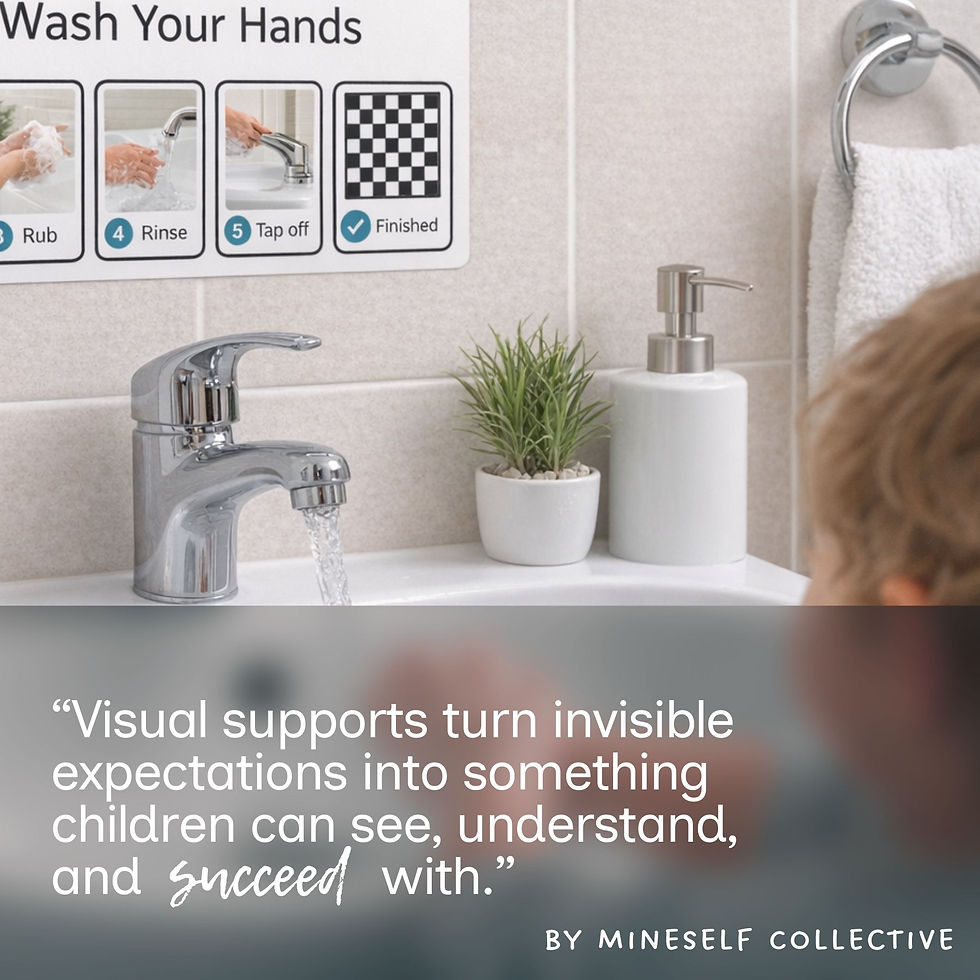
Visual supports are not about making things easier. They are about making things accessible. When information is visible, predictable and structured, children have a clearer pathway to success. And success builds:
confidence
participation
independence
belonging
Because every child deserves the opportunity to experience th
at moment of pride:
“I did it by mineself.”
Comments